Ranked purely by parent interest — the number of families who opened each school’s profile and spent time reading it between September 2025 and August 2026.
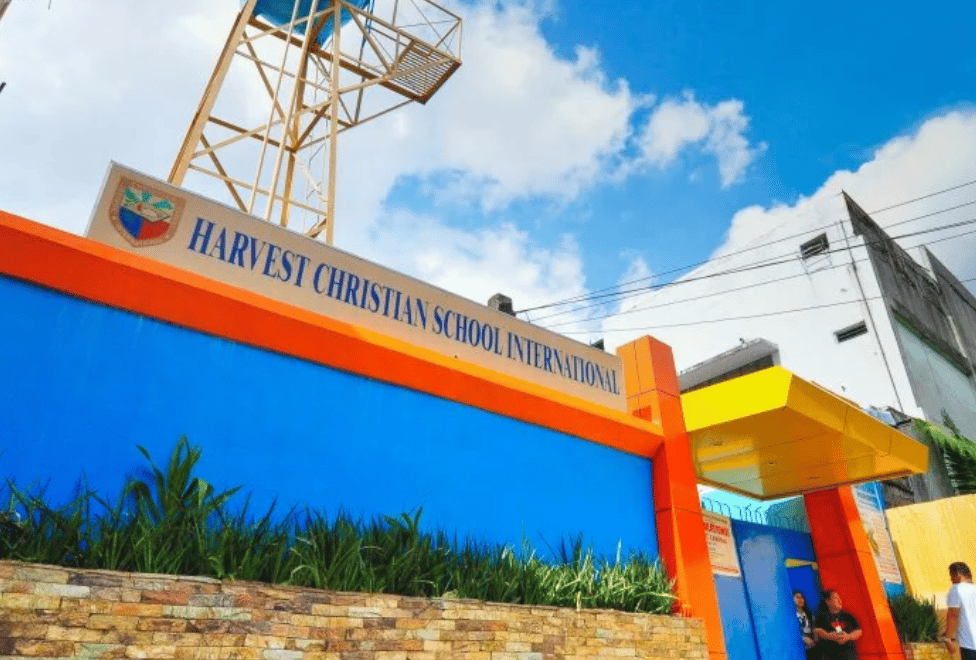
Harvest Christian School International (HCSI) is a non-stock, non-profit Christian mission school in Cebu, Philippines, founded in June 1997. The school offers K-12 basic education programs with both in-campus face-to-face learning and homeschooling/distance learning options. Additional programs include TESOL/TEFL certification, ESL courses, and Business and Entrepreneurship courses. HCSI is a member of the Association of Christian Schools International (ACSI) based in Colorado, USA. The school is led by School Director Pastor Arturo N. Tangal, CPA.
Maria Montessori International School (MMIS) in Cebu City operates MMIS campuses: Talamban and Gorordo. It opened in June 1984 as Maria Montessori Children's House and later expanded to educate Preschool through Senior High School. The Preschool uses a sensoriel, prepared environment with defined areas for Practical Life, Sensorial, Reading and Language, Mathematics, and Culture; English is the medium of instruction. The Primary and Secondary levels adopt a K-12 curriculum imbued with Montessori philosophy, aiming to unfold diverse learners through an integrative, outcome-based program. MMIS features initiatives such as MMIS-TECH and MMIS Innovation Hub. The school emphasizes service and community involvement through Outreach Programs, Citizenship activities, and Scouting. In Mathematics, Grades 1–3 use Singapore Math approach. Language of instruction is English; Filipino is taught as a subject. Clubs include Math Club, English Club, Science Club, and Filipino Club.
Starland International School Cebu Campus is part of a multi-campus network that follows the Philippine system and offers a range of learning modalities (Face-to-Face, Online Distance Learning, Blended Learning, and Homeschooling). The Cebu Campus opened on June 19, 2017 and is located at Zarill Commercial Center in Kadulang, Marigondon, Lapu-Lapu City. The campus serves Preschool through Senior High School with small class sizes (Preschool up to 10 per class in F2F; Elementary up to 15 per class; Grades 4–10 up to 20; Senior High up to 30 per class for F2F). The main language of instruction is English, with Nihongo and Spanish offered as foreign language subjects. The curriculum follows the DepEd Enhanced K to 12 system, and the school supports additional programs such as Journalism, Speech, robotics, and learning support. The school offers multiple modalities to accommodate different learning preferences and schedules, and bus service is available to several branches, including Cebu. The leadership is headed by Dr. Jean Dumago-Descallar, the founder and president of Starland International School.